Lithium-Ion Battery Safety
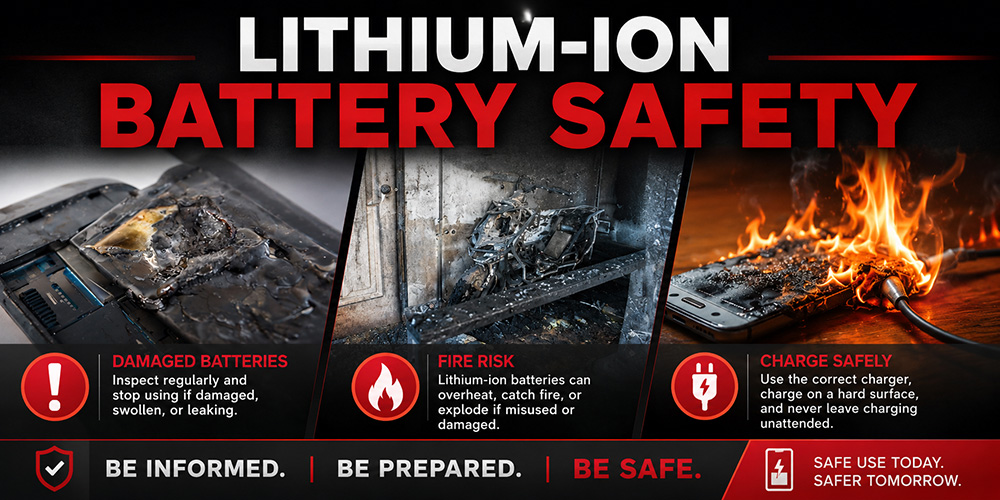
Lithium-ion batteries power many everyday devices, but improper charging, storage, or disposal can create serious fire and safety hazards.
Why Battery Safety Matters
Lithium-ion batteries are commonly used in smartphones, laptops, tablets, power tools, electric scooters, e-bikes, and other household devices. While these batteries are efficient and long-lasting, damaged batteries or improper use can lead to overheating, fires, explosions, and toxic gas release.
Safe Usage Guidelines
Use the Correct Charger
Always use the charger provided by the device manufacturer or one specifically approved for that device. Incompatible chargers can cause overheating and increase fire risk.
Charge Safely
Charge devices on a hard, stable surface away from beds, couches, paper, clothing, and other combustible materials. Avoid charging devices overnight or while unattended.
Inspect for Damage
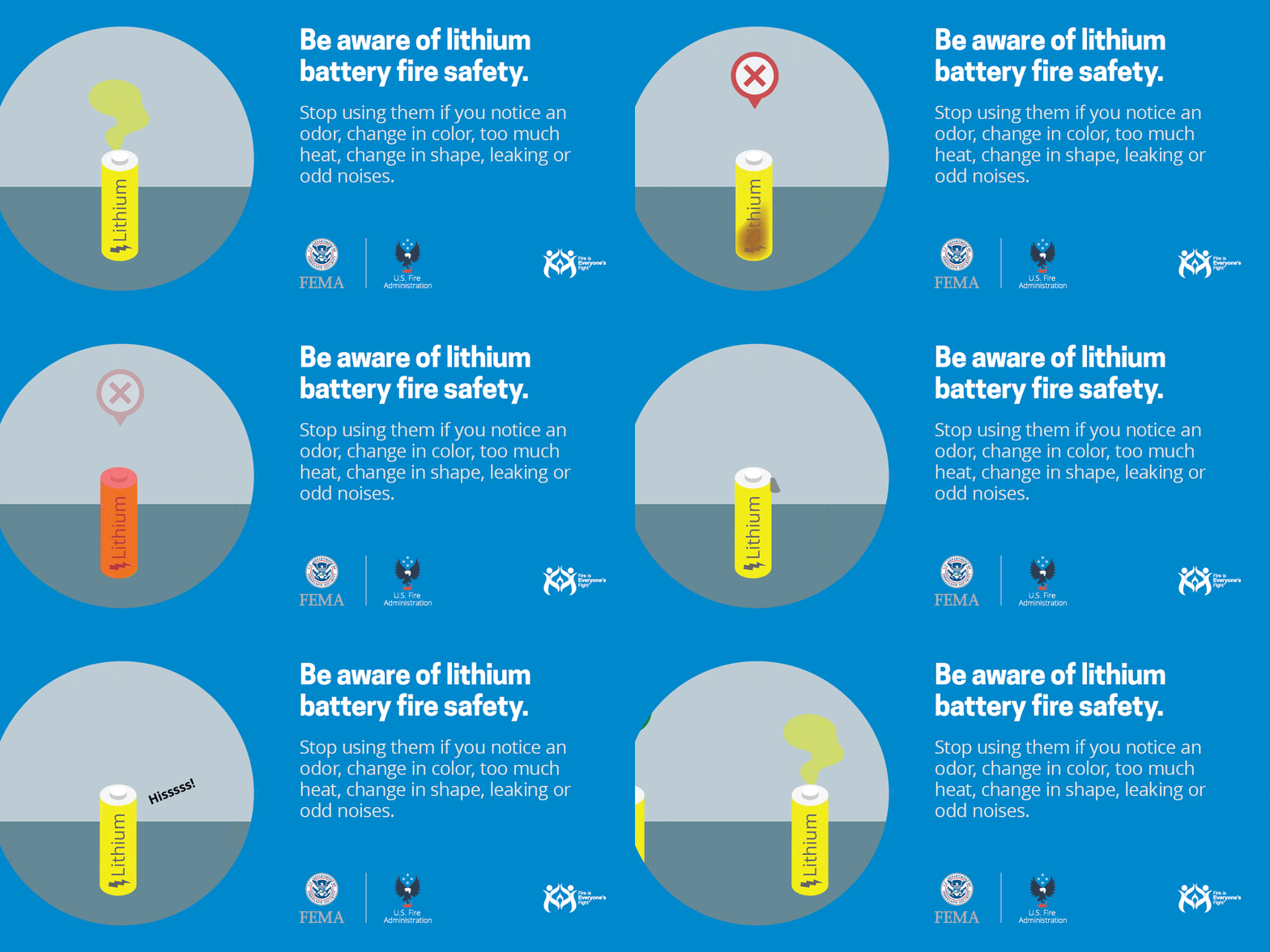
Stop using a battery or device if you notice swelling, leaking, unusual odor, excessive heat, popping sounds, smoke, or other signs of damage.
Proper Storage
Keep Batteries Cool and Dry
Store batteries in a cool, dry, well-ventilated area away from direct sunlight, heat sources, and damp or humid locations.
Separate From Flammables
Keep batteries and battery-powered devices away from flammable materials. Use extra care when storing larger devices such as e-bikes or scooters.
Store Partially Charged
For long-term storage, keep lithium-ion batteries partially charged, ideally around 30–50%, and follow the manufacturer’s storage instructions.
Warning Signs of a Battery Problem
Stop using the device immediately if you notice any signs of overheating, swelling, leaking, smoke, unusual odor, or unusual noises.
- The battery or device feels unusually hot.
- The battery is swollen, bulging, cracked, or leaking.
- You notice smoke, sparks, popping sounds, or a burning smell.
- The device no longer charges properly or shuts off unexpectedly.
Additional Safety Tips
Avoid Overcharging
Disconnect the device once it is fully charged and follow the manufacturer’s charging instructions.
Do Not Tamper
Do not modify, disassemble, crush, puncture, or attempt to repair lithium-ion batteries.
Recycle Properly
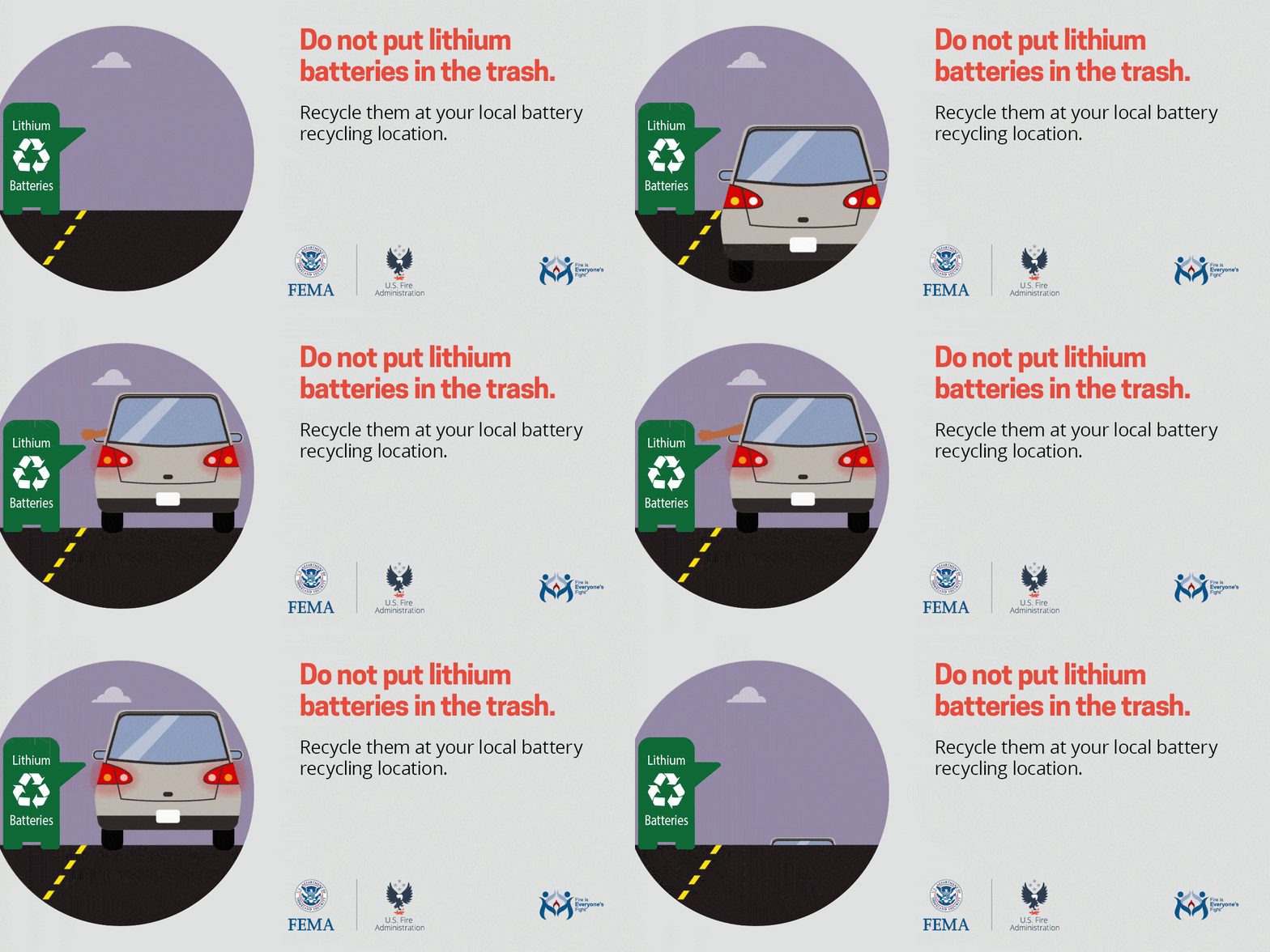
Never place lithium-ion batteries in regular trash. Take them to an approved battery recycling location or follow local disposal guidance.
Small Charging Habits Can Prevent Serious Fires
Using approved chargers, charging devices safely, storing batteries properly, and recycling damaged or old batteries can help reduce the risk of lithium-ion battery fires.
Additional Safety Reminders